There is no shortage of tools around personal injury intake. Firms have agencies, dashboards, call‑tracking platforms, CRMs, intake consultants, workflow automation, AI assistants, and sometimes outsourced call coverage too. The usual problem is not that none of these things work. It is that every one of them was built to run the practice — not to improve it, and specifically not to make sure an improvement, once made, keeps holding.
That distinction is the organizing idea for this whole tier. Running the practice means executing the work in front of you: generating demand, answering calls, recording what happened, triggering the next step, drafting a message, covering the phones. Improving the practice means something narrower and harder: finding where value is leaking, and sustaining the fix — making sure it holds after the people who cared about it stop watching. Every tool in this tier does the first job well. None of them, on its own, does the second, and the specific reason changes tool by tool, which is exactly what makes each one worth looking at on its own terms rather than dismissing the whole category at once.
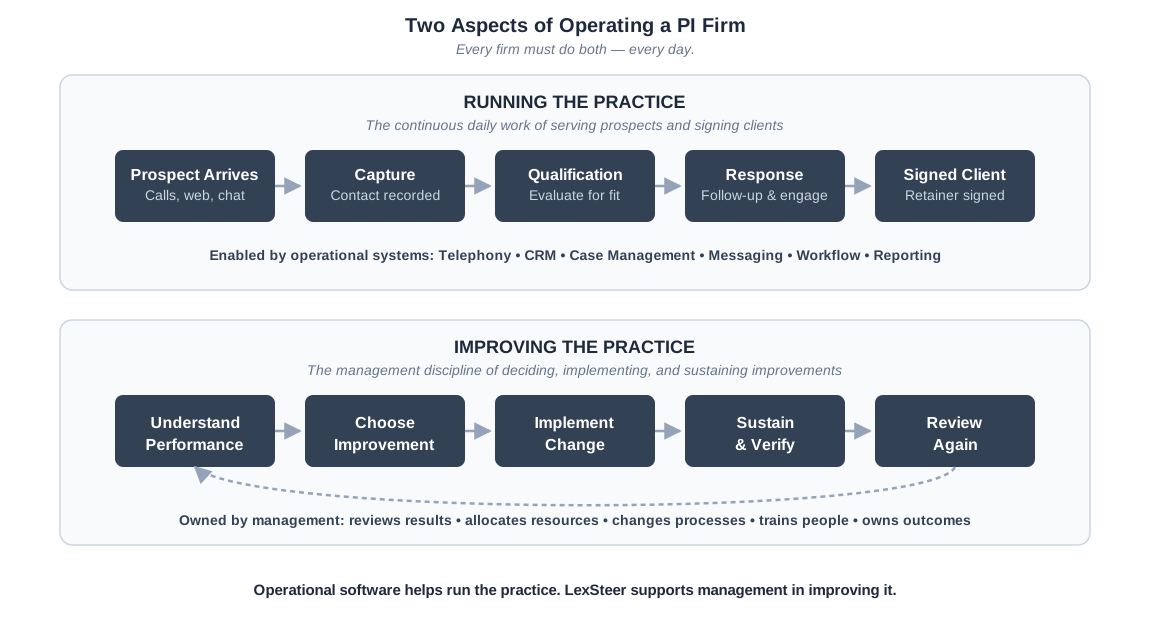
Every firm does both of those jobs every day, regardless of which vendors it uses. The map below shows where that split actually lands on the real technology stack a PI firm runs.
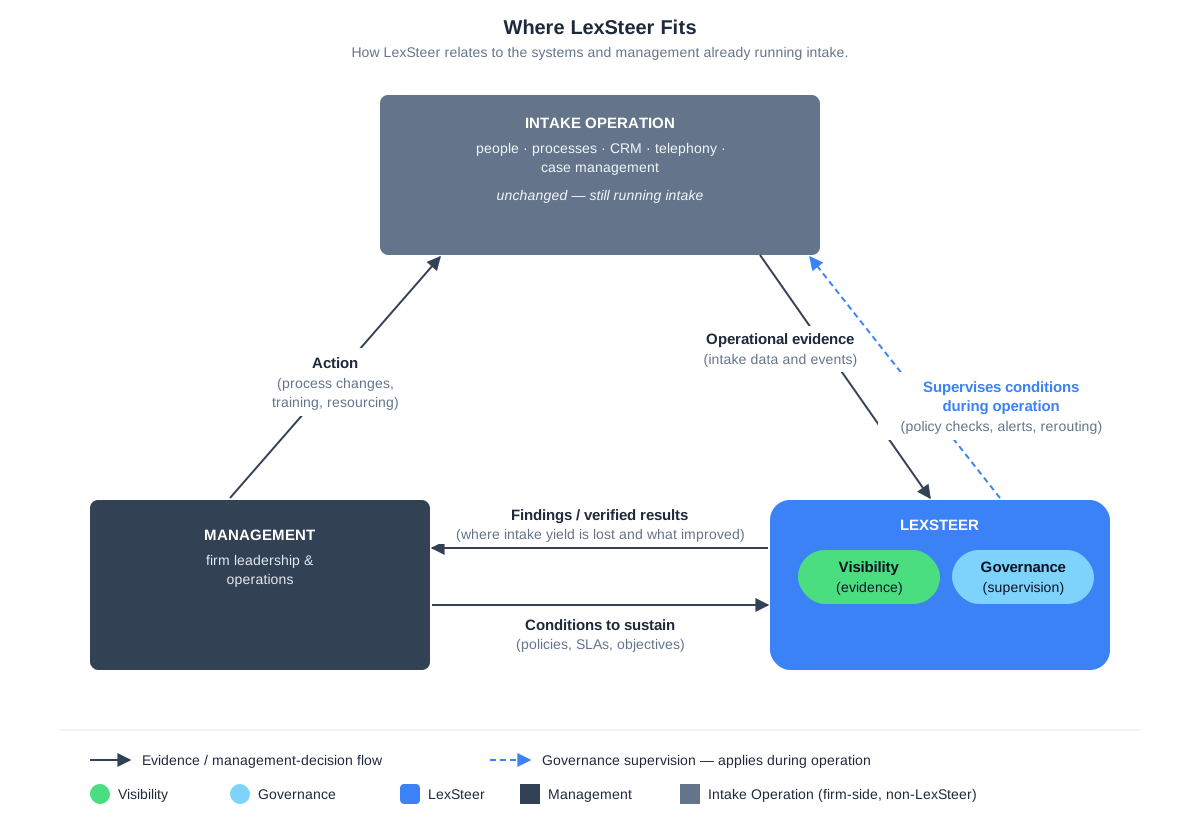
The map above shows the actual technology a PI firm already runs — not three abstract system categories, but the real stack: telephony, CRM, web forms, messaging, document systems, vendor intake, plus automation, reporting, and AI layered on top. Every one of those pieces runs the practice well. What sits above them, watching whether the practice is actually improving, is a different job entirely — one that depends on a chain, not any single piece of the stack. A prospect has to arrive, get captured, get qualified, get a timely response, get reviewed, and get a retainer: a sequence of links, each one owned by a different person, team, or system.
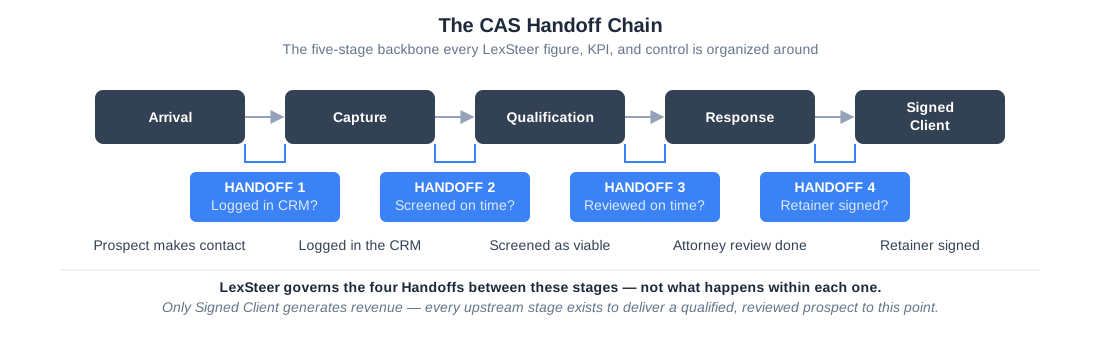
Value doesn’t usually disappear inside a link. It disappears at the joint between two links — the Handoff — where responsibility changes hands and where “someone should be on this” and “someone actually is” most often quietly diverge.
Links, not the chain
Most tools in this ecosystem strengthen one link. An agency strengthens the link that creates arrival. A CRM strengthens the link that records and organizes work. Automation strengthens the link that executes a rule. AI strengthens the link that drafts, triages, or responds. Each of those is a real, valuable improvement to that specific link.
None of them, by itself, is positioned to watch the joints on either side of it. A link doesn’t have visibility into what happens right before it or right after it — that is not a limitation of any particular product, it is what a link is. The thing that has to watch the joints is a layer that sits across the whole chain, not inside any one of its links.
Why “more tools” doesn’t create that layer
Firms often respond to a signed-case problem by adding more to the stack: a better agency, a newer CRM, more automation, an AI assistant at the front end. Each addition can genuinely improve the link it targets. None of them, by adding more of the same kind of tool, becomes the layer that watches the joints, because that is not a feature any of them were designed to have, and stacking more link-level tools does not change what layer they operate at.
This is the pattern the rest of this tier works through, one tool at a time, because the reason changes by category and the differences matter:
Marketing agencies and call centers are excluded by scope. Each is a link at one end of the chain, not a layer across it.
Reporting, analytics, and a consulting engagement are excluded by design. Each produces a read of the practice, once, and is not there to keep re-reading it as conditions drift.
A CRM is excluded by function. It records that work was assigned, not that it was verified complete.
Automation is excluded by scope, differently. It reliably fires a rule, but firing is not the same as confirming the rule produced the intended result.
AI is excluded for a sharper reason. The layer that watches the joints has to behave the same way every time, be provably repeatable, and be explainable by a named rule — a property of how a system is built, not how capable its model is.
None of this argues for replacing any of these tools. A firm that dropped its CRM, its agency, or its automation would likely perform worse, not better — each one earns its place by doing its own job well. The argument is narrower: none of them, however well run, is the layer that watches the joints between them, and firms that expect one to eventually grow into that job are waiting for a capability its architecture was never built to have.
What this tier covers
- What Marketing Agencies and Call Centers Can Fix—and What They Can’t — a link at each end of the chain (arrival, and the initial answer), not a layer that watches the joints between them.
- Why Better Reporting, Analytics, and Consulting Don’t Prevent Operational Loss — a read of the practice, sharp or not, delivered once or refreshed on a dashboard, with no actor waiting to act on what it finds.
- Why CRMs Don’t Prevent Operational Loss — a record of what was assigned, not a verification of what was actually completed.
- Automation Executes. Governance Verifies. — a rule that fires reliably, which is not the same as a result that is confirmed.
- Can AI Solve Intake Leakage? — judgment that can draft, triage, and route, but not a rule that can be governed on.
Every one of those tools runs the practice well. None of them is the layer that makes sure an improvement, once made, is still true next quarter. That is the job Visibility and Operational Governance exist to do — the subject of the tier that follows this one.