Marketing agencies and call centers are both excluded by scope from the job of improving intake: each is a link at one end of the chain, not a layer that watches the joints across it. That doesn’t make them the wrong place to look when signed-case performance weakens — both are visible, both are paid vendors, and both sit at the very front of the chain, one creating arrival, the other capturing it. Sometimes the diagnosis is right: a strong agency can stop a firm from wasting money on the wrong traffic, and a strong call center can stop a firm from missing calls it already paid to generate. Both are real, valuable improvements. Neither is the whole story.
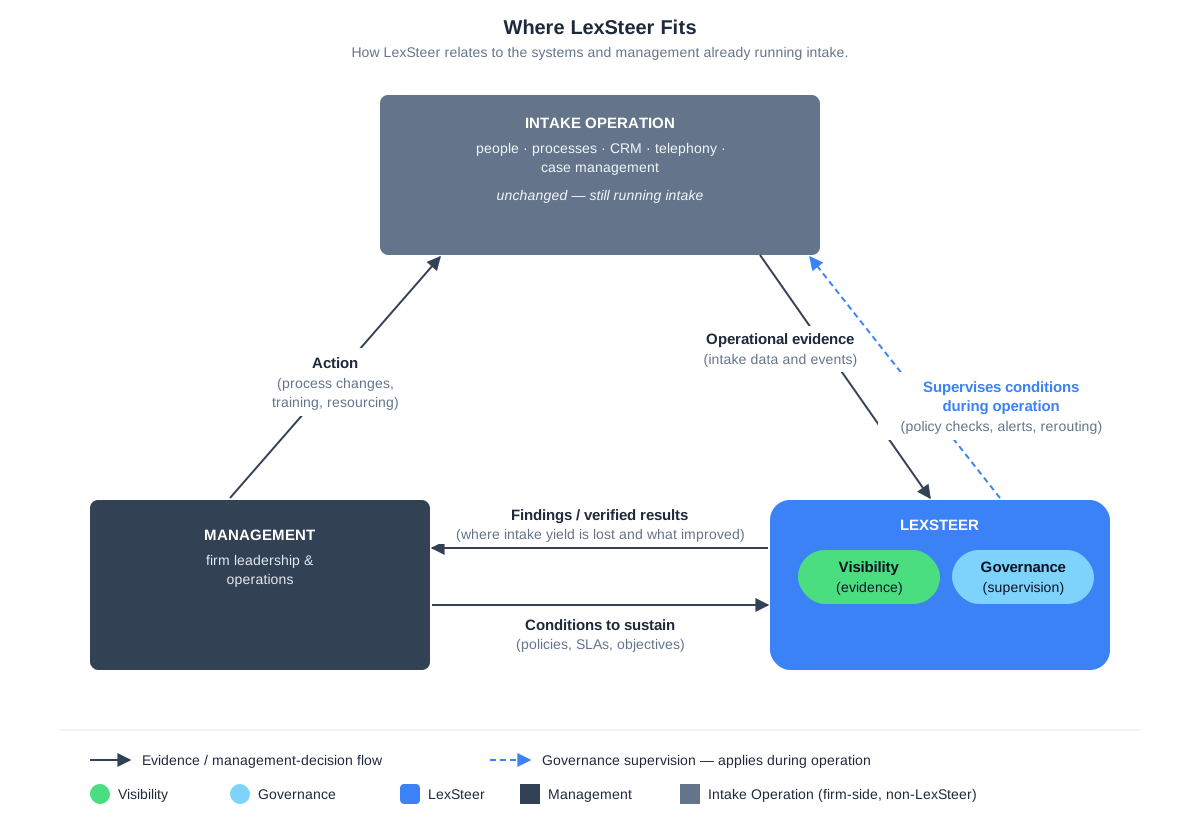
Agencies and call centers aren’t shown on the map above — they’re services a firm buys, not systems in its technology stack — but the same limit applies to both regardless: neither sits in a position to watch what happens after its own job is done.
What agencies genuinely improve
A good agency can make demand creation smarter: keyword strategy, media allocation, creative performance, landing-page conversion, call routing at the acquisition point, attribution clarity. It can show a firm which channels produce usable inquiries, which campaigns overpay for weak traffic, and where acquisition cost is outpacing economic value. That matters, because poor upstream targeting creates real downstream pain — intake wastes time on low-fit inquiries, attorneys get frustrated with weak case mix, and leadership mistakes a sourcing problem for an operations problem. Not every signed-case problem is downstream, and a good agency can help establish that.
What call centers genuinely improve
Used well, a call center reduces missed-call exposure, improves overflow handling, and extends responsiveness beyond normal office hours — making sure prospects are answered by a person rather than routed into voicemail or long delays. That matters most when arrival patterns are hard to staff internally: nights, weekends, sudden spikes, and uneven demand are all situations where outsourced coverage can outperform relying only on internal availability. Some call centers also collect basic intake information and route the matter into the firm’s workflow, creating a cleaner starting point for the next stage of handling. A missed call is one of the clearest forms of preventable loss in a perishable-demand business, and a call center that answers more consistently protects real value.
Where the responsibility ends
For both, the limit appears the moment the front-end job is done. Once a prospect arrives or a call is answered and handed into the firm, the risks become operationally downstream: was the callback completed when promised, did the record get captured correctly, did the matter reach the right person, did attorney review happen on time, did follow-up continue consistently? Neither an agency nor a call center owns those functions. A call center that performs well at the front end cannot prevent the firm from losing the case afterward through Process Loss — a prospect can be answered promptly and still sit too long waiting for the next required step.
Part of the confusion is that each vendor’s own best evidence can look like more than it is. An agency’s attribution data can make it look like the agency owns the whole journey — but knowing where a lead came from is not the same as governing the Handoffs that determine whether it becomes revenue. A call center’s answer-rate metrics can make it look like the operation is disciplined — but a prospect is not signed when the phone is answered, and coverage is not conversion control. Firms that mistake either kind of front-end visibility for downstream ownership stop the Diagnosis too early, fixing the visible point of failure while the real leakage goes untouched.
Why this matters for Intake Yield Management
The fix is a clean division: marketing and call coverage own attention and arrival, intake owns what happens after, and Visibility is what tells the firm which side of that line a given loss actually falls on. Both agencies and call centers remain necessary within Intake Yield Management — the discipline still depends on acquiring demand efficiently and covering it reliably — but the discipline’s distinct work begins once the opportunity exists and is in the firm’s hands, which is exactly where both vendors hand off responsibility. They strengthen the front of the chain. They don’t, by themselves, govern what comes after.