Automation has become one of the most attractive promises in PI intake because it offers something every firm wants more of at the same time: speed, consistency, and scale. A well-built automated sequence can send the first text immediately, assign the callback task without delay, trigger the right follow-up reminders, route a web form into the right queue, and reduce the amount of repetitive administrative work that keeps teams from getting to the prospect fast enough. In many firms, automation is one of the best upgrades available.
The problem begins when firms ask automation to do a different job than the one it was built to do. Automation is excluded from that other job by scope, differently than a CRM or a report: it reliably fires a rule, but firing is not the same as confirming the rule produced the intended result. Automation is designed to execute pre-defined actions when a condition is met. Operational Governance is designed to determine whether the intended action actually happened, on time, with a sufficient result — and what should happen next if it did not. Intake does not fail only when nothing has been triggered. It also fails when the trigger fired but the outcome still broke: a text was sent but no one handled the callback, a reminder was issued but attorney review still sat untouched, a task was assigned but the queue was overloaded and the case quietly aged. Automation can do exactly what it was told to do and still leave a firm exposed to Process Loss.
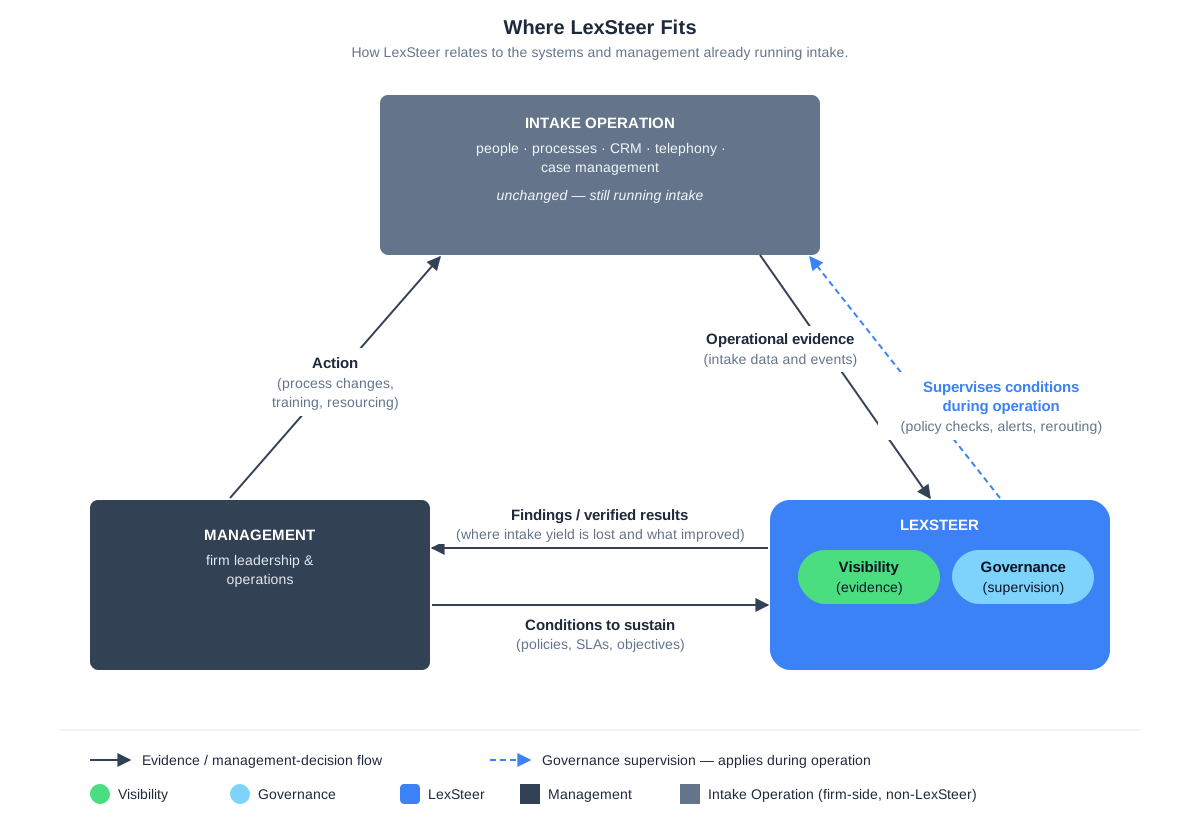
Automation sits on that map as a capability, not a governing layer — the loop below is what closes the gap it leaves open.
What automation genuinely improves
Used well, automation reduces the lag between arrival and first action, standardizes follow-up steps that previously depended on individual memory, and ensures the same basic sequence happens regardless of channel. It also removes clerical drag from intake staff — time that would otherwise come out of the responsiveness firms are trying to improve. When a firm has been too dependent on memory, sticky notes, or heroics, even modest automation creates dramatic gains. That is real progress. It just is not the whole control problem.
Why execution is not the same as verification
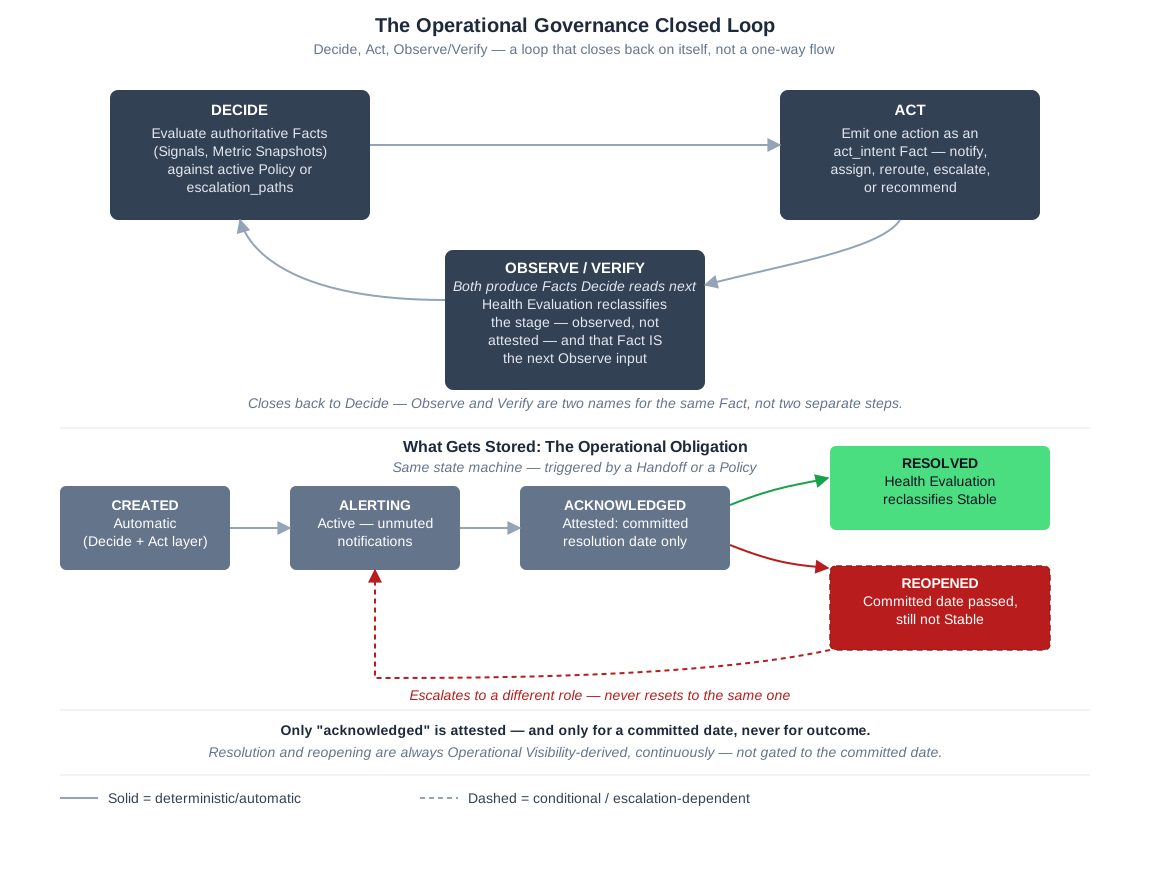
Automation works from instructions: if X happens, do Y. That logic is useful precisely because it is repeatable and indifferent to mood, memory, or workload — but the same strength is its limit. Automation assumes that triggering an action is close enough to ensuring an outcome. Governance does not make that assumption: it asks whether the required Handoff actually occurred within the timing window that protects the case, who owns the next response if it did not, what escalation follows if that fails too, and whether the case actually recovered after intervention. That is the difference between routine execution and closed-loop execution — one executes the planned move, the other keeps going until the gap is closed.
This limit is easiest to see in exceptions, which is where most real intake loss lives: a callback task is created but the assigned user is out that day; a follow-up sequence fires but the matter needs attorney review first; a form is captured correctly but belongs in a different queue than the routing rule assumed. In each case the automated system shows successful execution — the task was created, the reminder sent, the workflow ran — while the case is still exposed. That is where silent failure lives: not in the absence of automation, but in the gap between triggered activity and verified outcome. Adding more automation at this point produces diminishing returns — more conditions and branches make the workflow harder to audit without making the firm any more certain that a live Handoff, not just a rule, is actually being watched.
What this means for Intake Yield Management
Automation matters inside Intake Yield Management because repetitive actions should not depend on human memory — but it does not define the discipline, because triggering a step is not the same as verifying a result. Governance begins where the firm stops assuming that assigned work automatically became completed work, and completed work automatically became preserved yield. When Governance does step in — rerouting a stalled Handoff, escalating when the reroute also fails — that intervention creates a specific, trackable commitment: an Operational Obligation. It is created automatically, and the only thing anyone attests to along the way is a committed resolution date; whether the Obligation actually resolves is read from Visibility’s own evidence, not from anyone’s say-so. That is the difference between a rule firing once and a problem being carried through to a known outcome.
Automation executes. Governance verifies. A strong intake operation needs both — automation because repetitive actions should not depend on memory, and Operational Governance because a perishable opportunity should not depend on the hope that execution went as intended merely because the workflow log says something happened.